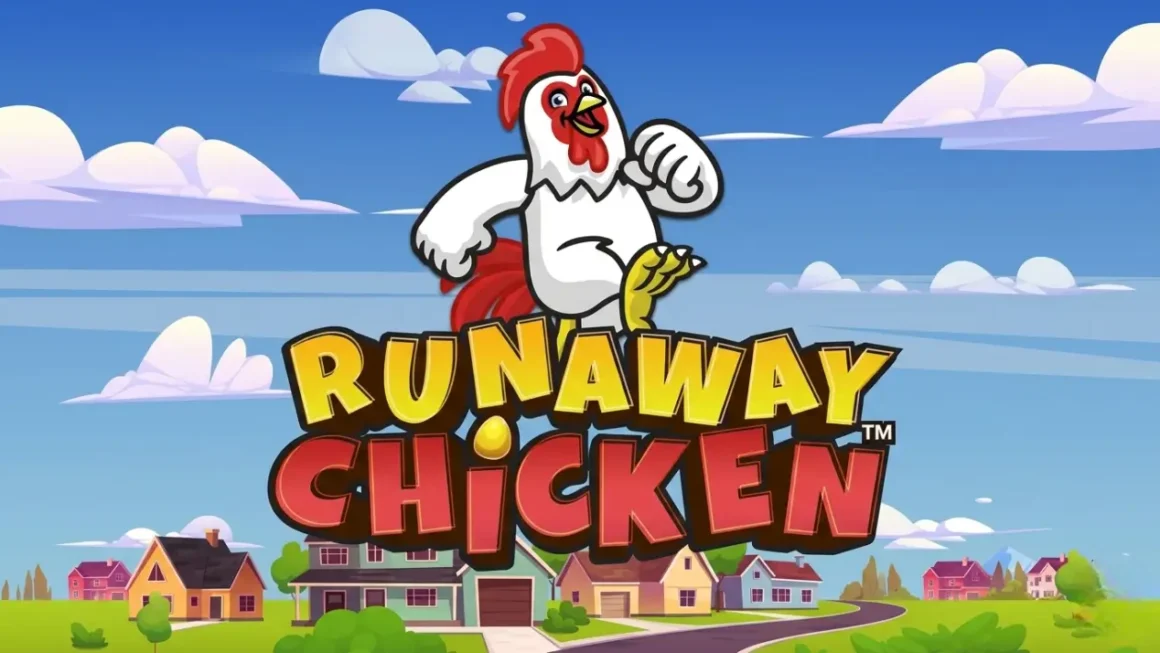
I’ll be upfront with you from the start: Chicken Dash is not a slot. It never was. If you landed here searching for reels, paylines, and scatter symbols — you’re looking at the wrong page. What TaDa Gaming built here is a crash-style arcade game where a cartoon chicken tries to cross a busy road, and your job is to decide when to cash out before that chicken gets flattened by a truck. The premise is as old as the joke it’s based on, but the game underneath is more interesting than that sounds.
I’ve spent roughly 400 rounds across Easy, Normal, and Hard mode testing Chicken Dash over several sessions on both desktop and mid-range Android. Here’s what I actually found.
What Kind of Game Is Chicken Dash, Exactly?
Before anything else, let’s settle this. Chicken Dash belongs in the crash game category alongside titles like Aviator (Spribe) and JetX (SmartSoft). The core mechanic is push-your-luck: you move the chicken forward one tile at a time, each safe step increases your multiplier, and you decide when to bank the money. Miss a step and you lose the round entirely.
TaDa Gaming released this in September–October 2025. It’s their answer to Chicken Road 2 by InOut Games — and if you’ve played that title, you’ll notice the similarities immediately. Same road-crossing premise, same tile progression, same risk modes. TaDa added some polish and a few modifier mechanics, but calling Chicken Dash highly original would be a stretch. It’s a competent derivative, and that’s fine as long as you know what you’re getting.
About TaDa Gaming: they’re a relatively young provider with a growing catalogue of over 100 games, primarily focused on Asia-Pacific markets. They’re not a household name in Western Europe, but they’ve been building a solid reputation for mobile-optimized titles. Chicken Dash is probably the game that’s gotten them the most attention outside their traditional markets, largely because the crash genre has mainstream crossover appeal in a way that regional fishing games don’t.
The key specs at a glance:
- RTP: 96.85% (varies slightly across sources — I’ve seen 95.5% to 97% cited, but 96.85% appears most consistently in the game’s own math model documentation)
- Max Win: 20,659x the bet
- Bet Range: €0.10 – €100 per round
- Difficulty Modes: Easy, Normal, Hard
- Special Mechanics: Chicken Dash boost, Bonus Bag
- Provably Fair: Yes
- Mobile: Fully optimized
- Release Date: September–October 2025
- Category: Crash / Arcade game (not a traditional video slot)
How the Gameplay Actually Works
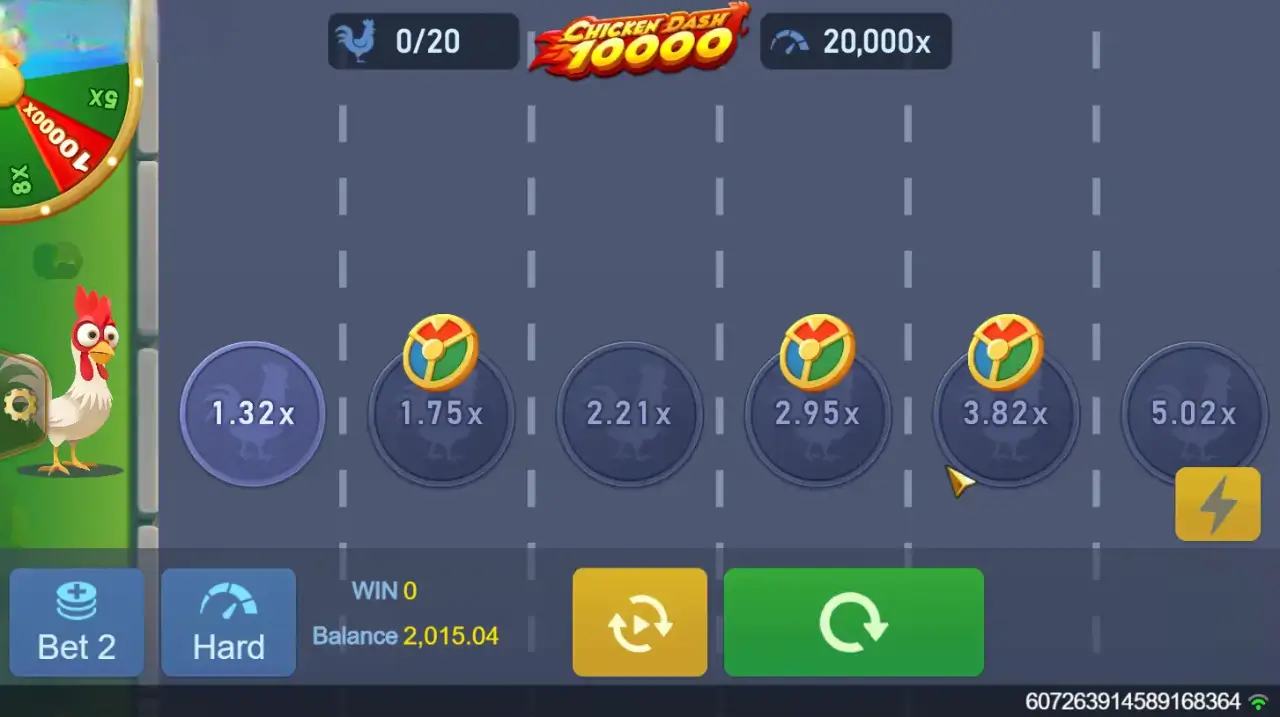
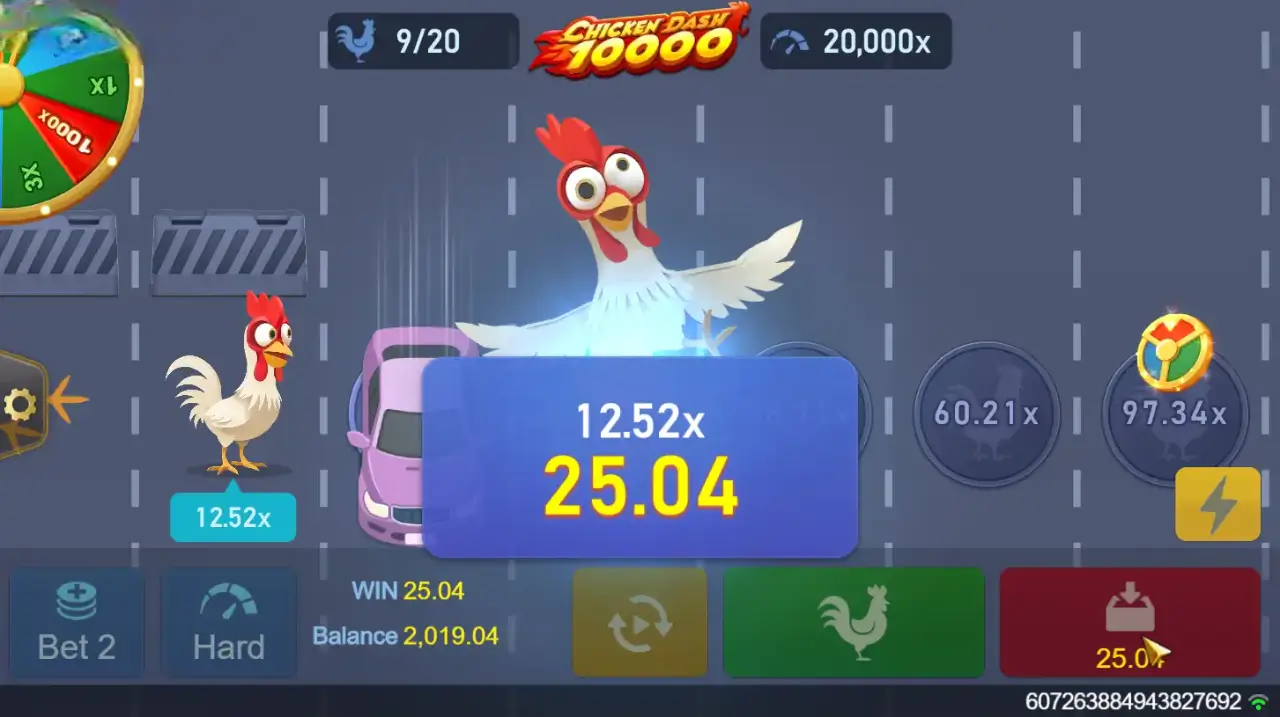
The playing field is a road divided into horizontal lanes. Your chicken stands on the grass verge to the left. You tap or click to advance it one lane at a time. Each lane you cross safely adds a multiplier increment. You can cash out at any point after a successful step. If a car hits the chicken, the round ends and you lose whatever you had accumulated.
The multiplier doesn’t jump at a fixed rate — it scales based on which difficulty mode you’re playing and how far you’ve progressed. The further you go, the steeper the increments, but also the higher the probability of losing the round before you get there.
A single round takes anywhere from 3 seconds to about 45 seconds depending on how far you push. There’s no spinning animation, no waiting for reels to settle. You click, the chicken moves or gets hit, you react. The pace is entirely in your hands, which makes Chicken Dash significantly faster than most slot games in terms of decisions per minute — and significantly more emotionally demanding.
The betting interface is minimal by design. You set your stake amount before the round begins, choose your difficulty mode, and then you’re in. There’s no way to change your bet mid-round. Your difficulty choice locks in the structural parameters (tile count, multiplier curve, step risk), and your cash-out choice is made one step at a time as the round unfolds. It’s an elegantly simple setup that doesn’t need a tutorial.
Three things make each round more than just a coin flip:
The Chicken Dash Boost — Randomly, when you tap to move, the game triggers this modifier and advances your chicken 2–3 tiles automatically. Those tiles are guaranteed safe. You can’t die on a Chicken Dash boost step. In my testing, this triggered maybe once every 12–15 rounds, more frequently on Easy. When it fires late in a hard-mode run, it’s a genuine adrenaline moment because you get pushed deeper than you’d have risked yourself.
Bonus Bags — A van occasionally appears on the road and drops a bag of money on a specific tile. If you reach that tile and then cash out, you collect the bonus. Here’s the catch: the bag is added to your payout only when you successfully cash out after collecting it. If you reach the bag tile, pocket the multiplier it represents, but then keep going and get hit — the bonus disappears. The bonus bag creates a decision point that’s more psychologically interesting than it sounds.
The Cash-Out Button — This is the whole game. Every successful step is a new decision: take the money at this multiplier, or push for the next tile. That’s it. No autoplay in the traditional sense (you make each move manually). No special symbol combinations to track. Pure decision-making.
Difficulty Modes: The Numbers Behind Each Level
This is where Chicken Dash gets genuinely interesting, and where most reviews skim over the important details. The three modes are not just “harder” versions of the same thing — they’re structurally different games.
Easy Mode gives you 28 tiles to cross. The maximum multiplier if you reach the end is x14.54. This sounds modest until you consider that on Easy, the probability of each individual step succeeding is meaningfully higher than on other modes. You’ll cash out frequently in the 2x–5x range, and you’ll reach double digits often enough to sustain a session on a modest bankroll.
Normal Mode drops the tile count to 24, but the maximum multiplier at the end jumps to x43.15. The step-by-step risk increases compared to Easy, and the multiplier scaling accelerates more steeply in the second half of the road. Normal is where most experienced crash game players will spend their time — it hits a reasonable balance between achievable wins and meaningful upside.
Hard Mode is a different animal. Twenty tiles. Maximum multiplier of 20,659x. The curve on Hard is brutal: each individual step carries significantly more risk than on Normal, and the multiplier increments are small in the first half before going exponential in the second half. In around 80 Hard mode rounds during testing, I hit the double-digit multiplier range maybe 9 times. I hit above 50x twice. I never came close to 1,000x.
That 20,659x maximum is real, technically. The odds of actually reaching it are extremely slim. Treat it as a theoretical ceiling, not a realistic target. The useful range on Hard is cashing out somewhere in the 10x–50x window on the runs where you’re running well, and accepting a lot of losses in the rounds where you aren’t.
RTP and the Math Model
The 96.85% RTP means that for every €100 wagered across many thousands of rounds, the game returns approximately €96.85. That’s a competitive number for the crash game category. Aviator sits at 97%, JetX at 97% — so Chicken Dash is slightly below those, though not dramatically so.
What RTP doesn’t tell you is session-to-session variance, and that variance is enormous on Hard mode. In a 20-round Hard session with €1 stakes (€20 total risk), I personally experienced swings from -€18 to +€34 depending almost entirely on whether I got lucky on a handful of steps. Easy mode sessions on the same stake size were far less dramatic — typical range was ±€8 over 20 rounds.
The house edge is roughly 3.15%. That’s real money leaving your bankroll over time, which is why the cash-out discipline matters far more than any “strategy.”
One honest note: multiple review sites list different RTP values for this game — I’ve seen 95.5%, 96.20%, 96.85%, and 97% cited by different sources for what appears to be the same title. Some of this confusion may come from TaDa Gaming offering different RTP configurations to different casino operators, which is common practice. Always check the info panel within the game itself at your specific casino to verify the RTP in your jurisdiction.
Special Features: What They’re Worth in Practice
Chicken Dash Boost — In practical terms this is a free gift when it fires. You get 2–3 guaranteed safe tiles without risk. On Easy and Normal it’s a nice push. On Hard mode, getting a boost when you’re already at a significant multiplier is one of the better feelings the game offers. It can’t be bought or triggered intentionally.
Bonus Bags — I found myself staying one step longer than I should have several times trying to collect a bag. In retrospect, that was the wrong call more often than not. The bag value rarely justifies the additional risk unless you’re already committed to pushing further. My recommendation: if the bag appears within 2–3 tiles of your natural cash-out point, go for it. If it appears 5+ tiles ahead, ignore it and bank what you have.
No Gamble Feature, No Autoplay — Some players will see this as a weakness. I don’t. The absence of autoplay forces active decision-making every round, which is the entire point of a crash game. A gamble feature would add nothing meaningful here.
Visual and Audio Design: Honest Assessment
The cartoon aesthetic is clean and functional. The chicken is charming. The road is clearly rendered with readable multiplier values on each tile. Nothing here is technically impressive — the animations are simple, the art style is minimal — but it does the job without getting in the way.
Where I have to be honest: this looks almost identical to Chicken Road 2. Same visual vocabulary, same type of interface, same general feel. TaDa Gaming hasn’t reinvented anything visually. If you’ve played other chicken-road crash games, you will have déjà vu immediately.
The sound design is basic. There’s a light upbeat track in the background, some sound effects when the chicken moves or gets hit. Nothing you’d leave the volume on for, but also nothing that would make you turn it off immediately.
On mobile, the visual quality holds up well. Text remains readable, touch targets are appropriately sized, and the UI doesn’t get cramped on a 6-inch screen. The game rendered without visual glitches on every device I tested.
Mobile Performance
I tested Chicken Dash on three devices: a Samsung Galaxy A54 (mid-range 2023 Android), an older Redmi Note 10 (2021), and a 2022 iPhone SE. All three handled the game without issues.
Load time on 4G was under 6 seconds on all devices. On WiFi it was under 3 seconds. The game is not data-heavy — rounds are fast, animations are lightweight. For players in markets where mobile data costs matter, this is worth noting. I’d estimate a 30-minute session consumes well under 10MB of data, which puts it in the same category as light news browsing, not video streaming.
Touch response felt slightly more accurate on the iPhones than on the Android devices, but the difference was minor. On the Redmi Note 10, there was no perceptible lag during any part of gameplay. The game is genuinely mobile-first in its design — the controls were clearly built with touch in mind, not adapted from a desktop version. The cash-out button is large and well-placed. You won’t accidentally mis-tap it at a critical moment, which matters when you’re deciding whether to risk one more step at a 15x multiplier.
The interface scales cleanly across different screen sizes. I tested it on a 5.4-inch screen (iPhone SE) and a 6.6-inch screen (A54), and the playfield was readable and comfortable on both. Tile labels showing multiplier values remained legible even on the smaller screen.
Battery consumption during a 30-minute session was roughly 4–6% on both Android devices. That’s normal for a browser-based game. No unusual heat build-up was noticed.
The one limitation: there’s no landscape lock option. The game runs in portrait orientation only. For players who prefer landscape for extended sessions, this is a mild annoyance. Some crash game players habitually rotate their phone for these titles, and Chicken Dash simply won’t follow.
Bankroll Management: How to Actually Approach This
This is the section most reviews get wrong by being too vague. Here’s a concrete approach.
The 100-Unit System — Divide your session budget into 100 units. If you’re depositing €20, each unit is €0.20, so your bet per round is €0.20. This gives you enough runway to survive the variance without burning through your balance in 10 rounds.
On Easy mode: bet 1 unit per round, cash-out target in the 3x–4x range. At 3x, you’re up 2 units per win. Your break-even win rate is roughly 33% — and on Easy, you’ll exceed that frequently enough to sustain a session.
On Normal mode: same 1 unit per round, but I’d push the cash-out target to 5x–8x depending on how the session is feeling. Don’t try to be too precise — Normal mode volatility means you need to be flexible.
On Hard mode: bet 0.5 units per round. Cash out at 10x or set a mental target above 50x and accept that most rounds will end in a loss. There’s no satisfying middle ground on Hard — either you’re banking modest gains quickly, or you’re taking real shots at the upper multiplier range.
Session Length Matters Too — One thing that rarely gets discussed in crash game guides is session duration. In my experience, Chicken Dash requires active decision-making every round, which creates mental fatigue faster than passive slot play. After 30–40 minutes, decision quality noticeably degrades — I started pushing further than my original plan on more rounds, and I started cashing out earlier than necessary on others. Both are errors driven by session fatigue. Set a time limit alongside your bankroll limit. 25–30 minutes is a reasonable session for active crash game play.
The 10-Unit Stop-Loss — If you’re down 10 units from your session start, close the game. This isn’t defeatism. It’s the most important rule in crash game play. The urge to double your stakes to recover quickly is exactly how sessions go from bad to catastrophic. In crash games specifically, the temptation is to move up to Hard mode when losing on Easy — don’t. Higher difficulty doesn’t compensate for a negative variance streak; it amplifies it.
The Near-Miss Trap — The most psychologically dangerous moment in Chicken Dash is stepping one tile further after a close call where the chicken almost got hit (but didn’t, because a Boost fired or you got lucky). That near-miss does not tell you anything useful about what happens on the next tile. The game has no memory. Every step is statistically independent of the previous one.
I caught myself three times during testing pushing one more step after a near-miss moment. All three times, the chicken got hit immediately on the next step. That sample size proves nothing statistically, but the behavioral pattern it represents is real and well-documented in gambling psychology literature. The near-miss creates a false sense that you’re “due” for a safe step. You’re not.
Keep Notes — The game does not save bet history. If you’re playing seriously, keep a simple log: difficulty level, target multiplier, actual cash-out multiplier, result. After 50 entries you’ll have enough data to know which difficulty and target window suits your personal risk tolerance. You’ll also start to notice patterns in your own behavior — specifically, whether you’re consistently cashing out above or below your stated target. That gap is where the real work is.
How Chicken Dash Compares to the Competition
The crash game market has a chicken-themed corner that’s become surprisingly crowded in the past two years. Here’s an honest comparison of the main players:
| Game | Developer | RTP | Max Win | Difficulty Modes | Auto Cashout | Best For |
|---|---|---|---|---|---|---|
| Chicken Dash | TaDa Gaming | 96.85% | 20,659x | Yes (3) | No | Active mobile play |
| Chicken Road 2 | InOut Games | ~96% | Similar | Yes | No | Same as Chicken Dash |
| Aviator | Spribe | 97% | Unlimited | No | Yes | First-time crash players |
| JetX | SmartSoft | 97% | ~25,000x | No | Yes | Set-and-forget approach |
| Chicken Cross | Various | Varies | Varies | Varies | Varies | Crypto casino players |
Chicken Dash vs. Aviator — Aviator is the genre benchmark. It has a cleaner presentation, broader casino availability, slightly higher RTP (97%), and an auto cashout feature that Chicken Dash lacks. If you’ve never played a crash game before, Aviator is the better starting point. Chicken Dash wins on interactive engagement — the active tile-by-tile movement creates a different kind of tension that many players prefer once they’re comfortable with the crash format. In Aviator, a plane flies until it crashes, and you cash out during that flight. In Chicken Dash, you’re making individual yes/no decisions at each step. The felt experience is quite different even though the underlying concept is similar.
Chicken Dash vs. Chicken Road 2 (InOut Games) — These are nearly identical games. If you’ve played Chicken Road 2, you have played about 90% of Chicken Dash. TaDa’s version has slightly cleaner visuals and the Bonus Bag feature, but there’s no meaningful reason to choose one over the other except for which casino you’re already using. If both are available at your platform, try them both in demo mode and see which interface you prefer — it’ll come down to personal taste.
Chicken Dash vs. JetX — Different mechanic entirely (JetX uses an ascending multiplier that crashes like Aviator). JetX has auto cashout, which changes the entire strategic approach — you can set it to automatically cash at 2x every round and walk away with a consistent low-variance experience. Chicken Dash has no equivalent. For players who want set-and-forget crash mechanics, JetX is preferable. Chicken Dash is specifically for players who want active, round-by-round control.
Chicken Dash vs. Chicken Cross (crypto casinos) — Chicken Cross variants found on crypto platforms like Stake offer similar mechanics with provably fair verification. If you’re in a crypto casino ecosystem, these alternatives are worth checking — the math models can differ enough to matter. Stake’s in-house games tend to have competitive RTPs and are independently verifiable, which some players value over traditional licensing models.
Where to Play
Chicken Dash is available at licensed operators including 888 Casino, LeoVegas, and Betsson. Availability in specific regions depends on local licensing — the game is certified for UK (UKGC), Sweden (Spelinspektionen), Malta (MGA), and select North American markets (New Jersey, Ontario).
Crypto casino availability is also growing, with BC.Game among the platforms carrying the title. For players who value provably fair verification over traditional licensing, the crypto route has advantages.
When choosing where to play, a few things worth checking: confirm the RTP is listed in the game info panel (it should be 96.85% or very close — if a casino is offering a reduced-RTP version, the paytable will show it), verify that the minimum bet starts at €0.10 or the local currency equivalent, and check whether there’s a direct-launch demo without mandatory registration. Several casinos gate the demo behind an account sign-up, which is an unnecessary friction.
Deposit methods and speeds matter too, especially for mobile-first players. Quick deposit and withdrawal turnaround improves the overall experience regardless of which game you’re playing.
A demo version is available at multiple sites without registration. I’d strongly recommend playing at least 50 rounds in demo mode before committing real money — not to learn a strategy (there isn’t one that beats randomness), but to calibrate your gut reaction to different difficulty levels and figure out which cash-out range feels comfortable for you personally. Specifically: play 20 rounds on Easy, 20 on Normal, and 10 on Hard. By the end of that exercise you’ll have a clear sense of where your personal risk tolerance sits.
FAQ
What is the RTP of Chicken Dash? The most consistently cited figure is 96.85%. Some casino operators may run the game at a slightly different RTP — always check the in-game info panel at your specific casino to confirm.
What is the maximum win in Chicken Dash? The absolute maximum is 20,659x the bet, achieved only by completing Hard mode in full. This requires crossing all 20 tiles on the most dangerous difficulty level. In practical terms, you’re extremely unlikely to reach this number. Treat anything above 100x on Hard as a strong result.
Is Chicken Dash the same as a slot game? No. Chicken Dash is a crash-style arcade game. It has no reels, no paylines, no scatter symbols, and no free spins. The win mechanic is entirely based on how far you advance the chicken before cashing out or being hit. Many casino platforms list it alongside slots for discovery purposes, but the game type is different.
Can I play Chicken Dash on my phone? Yes, and it’s well-suited to mobile play. The game runs directly in a mobile browser without requiring a download. Touch controls are responsive, the interface scales well on screens from 5 inches upward, and the game is lightweight enough to run smoothly on 4G.
What’s the difference between Easy, Normal, and Hard mode? Easy has 28 tiles with a maximum multiplier of x14.54. Normal has 24 tiles with a maximum of x43.15. Hard has 20 tiles with a maximum of x19,659. Each mode’s step-by-step risk increases from Easy to Hard. Easy is recommended for new players and conservative sessions; Hard is for experienced crash game players comfortable with high variance.
Final Verdict
Score: 7/10
Chicken Dash is a well-executed, competent crash game that does nothing wrong and nothing particularly new. The tile-by-tile mechanic creates genuine tension. The three difficulty modes give it real depth for players willing to engage with the math. The mobile performance is excellent. The special mechanics — Chicken Dash boost and Bonus Bags — add just enough variety to prevent it from feeling monotonous after the first few sessions.
The weaknesses are real: it’s visually and mechanically derivative of Chicken Road 2, the Hard mode jackpot is a number that exists mostly to look impressive in marketing, and the absence of an auto cashout feature will frustrate players who like systematic approaches. The RTP being slightly below Aviator’s 97% is a minor mark against it mathematically, even if it barely registers in day-to-day play.
Pros:
- Genuinely interactive — you make a real decision every step
- Three distinct difficulty modes with meaningfully different math
- Excellent mobile performance across device types
- Provably fair, transparent math model
- Low minimum bet (€0.10) makes bankroll management accessible
Cons:
- Nearly identical to Chicken Road 2 in mechanics and visuals
- No auto cashout feature
- Hard mode maximum win figure is misleading given the actual odds of reaching it
- Portrait-only orientation on mobile
- No bet history saved — manual tracking required
Play Chicken Dash if: You enjoy active, decision-based crash games, you’re primarily on mobile, and you want a game where each round feels like it has a real choice at its center.
Skip it if: You’re already comfortable with Chicken Road 2 (you’re not getting enough that’s new to bother), or if you prefer the systematic auto cashout functionality that Aviator and JetX provide.
The chicken crosses the road because the multipliers are on the other side. Whether you make it there is your decision to make — and that’s exactly the right amount of control to give a player.
Disclaimer: Online gambling involves real financial risk. Always play within your means. If gambling is affecting your life negatively, contact your local responsible gambling support service. Demo play is available for all titles mentioned — use it.