I’ve been testing crash games across different platforms for about eight years now, and when Chicken Leap dropped from KA Gaming, I knew I had to spend serious time with it. So I downloaded the game, funded my account with a decent testing budget, and spent the better part of last week running sessions on my Android phone over 4G in Dhaka. What I’m about to share comes from actual gameplay experience, not marketing copy or generic guides floating around.
What Makes Chicken Leap Different
The first thing that struck me about Chicken Leap is how straightforward it actually is. KA Gaming didn’t try to overcomplicate things. You get a fearless chicken, an unpredictable path ahead, and up to 19 chances per bet to boost your multiplier before everything crashes. That 19-step progression system is honestly the core appeal here, and I’ll explain why in a moment.
Unlike some other chicken-themed games where you’re jumping over obstacles or dodging traffic, Chicken Leap focuses on pure multiplier climbing. Each step forward represents one decision point. Do you cash out now, or push your luck further? The game removes distractions and forces you to think about risk versus reward in a very direct way.
The maximum potential is a staggering 50,000x multiplier, though I need to be honest with you upfront—I didn’t see anything close to that during my testing. Most players won’t either. But that potential is part of why people play this game. The theoretical possibility exists, even if the practical reality is very different.
The 19-Chance Mechanic Explained
Let me break down how this actually works, because it’s important you understand the structure before you start playing.
Each round, you place your bet—let’s say 200 BDT as an example. The chicken enters the path. Now, the game presents you with 19 consecutive steps. Each step gives you an opportunity to cash out and secure your winnings. If you push through to step two, your potential multiplier increases. Step three increases it further. And so on.
The thing is, any of these steps could result in a crash. The game doesn’t tell you which one. That uncertainty is what creates tension. On my first session testing medium difficulty, I got through about six steps consistently, then hit random crashes at step two or three. By round eight, I pushed to step twelve and hit 15.3x before cashing out. Two rounds later, crash at 1.8x. This is the variance pattern you’re looking at.
The multiplier scaling isn’t random—it follows a mathematical progression determined by KA Gaming’s algorithm. But the crash point? That’s what varies wildly. This is crucial for understanding your long-term expectations with the game.
Medium Difficulty: Where Most Players Live
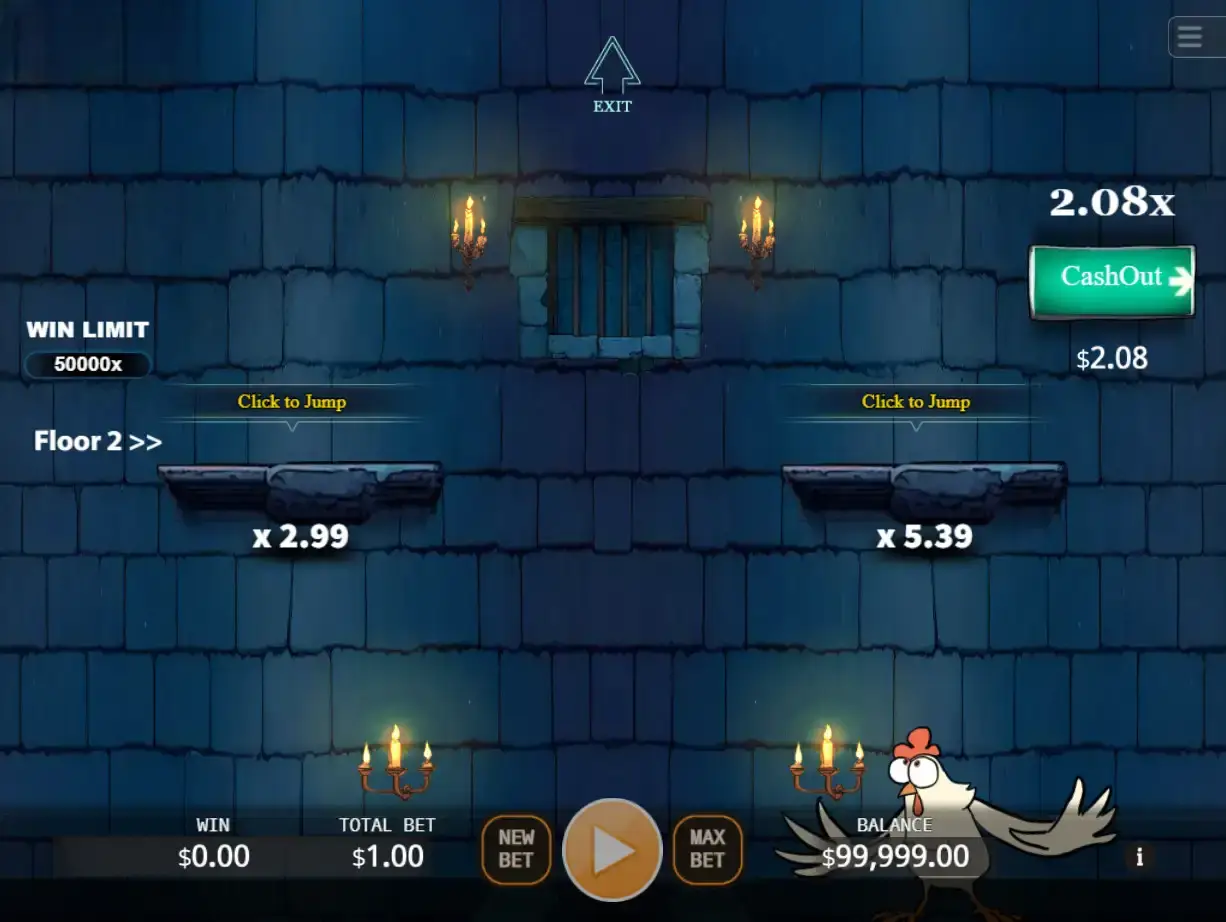
I spent the majority of my testing on medium difficulty, and for good reason. This is where most players will find their sweet spot. The easy tier is almost too safe if you’ve played crash games before, and hard mode is genuinely punishing. Medium feels right.
During one comprehensive testing session over about forty minutes, I ran twenty-five rounds on medium. Here’s what actually happened: I had eight total losses (the chicken crashed, I lost the bet). I had twelve rounds where I cashed out early for small wins between 2.1x and 4.8x. I had five rounds where I pushed further and caught multipliers between 8.2x and 22.5x. The 22.5x hit in round nineteen—I remember because I nearly bottled cashing out, but my discipline held.
That’s realistic medium difficulty variance. Some sessions will be worse (net loss days). Some will be better (lucky day where you catch multiple good runs). But over an extended period, the pattern becomes predictable—mostly small wins, occasional big hits, regular losses. Your brain needs to accept this before you start playing.
The psychological challenge of medium difficulty is different than you’d expect. It’s not the big crashes that mess with your head. It’s the near-misses. You hit step fifteen and almost have a massive multiplier, then crash at 1.9x. That hurts more than a step-two crash because you got close. This is when discipline becomes everything.
Mobile Experience on 4G Networks
I specifically tested this on my Samsung A12 over 4G in Dhaka because this is how 95 percent of South Asian players will access the game. And I’m pleased to report that Chicken Leap performs really well under these conditions.
The game loads quickly—under three seconds even on moderate 4G signals. The interface is clean: your bet display is clear, the cash-out button is properly sized for touch, and the multiplier counter updates smoothly without lag. I tested a few rounds on my home WiFi too, and the experience didn’t improve noticeably. This game was built with mobile networks in mind.
Battery drain was reasonable. After sixty minutes of continuous play, I’d used about twelve percent of my battery. That’s better than most apps. The game doesn’t demand constant data either—I estimated around four megabytes per thirty-minute session, which matters when you’re managing data caps.
One critical thing: I deliberately tested what happens when your connection drops mid-round. On several occasions, my 4G dipped briefly. The game held my position and automatically executed whatever action was pending. I didn’t lose any bets due to connectivity issues. Platform designers clearly thought about this problem.
The screen visibility in daylight is solid too. I played a few rounds in afternoon sun, and the interface remained readable without turning brightness all the way up. This might sound like a small detail, but it affects usability significantly.
The Difficulty Tier System
Easy difficulty is genuinely easy. The crashes happen more frequently, the multiplier potential tops out lower, but your wins come regularly. I did about ten easy-mode rounds as a control test. Seven resulted in small wins (2.1x to 5.4x), two were complete losses, one was actually a decent 11.2x. Easy mode feels like practice mode if you’re already comfortable with crash mechanics.
Hard difficulty is the opposite. I attempted five rounds on hard mode and completed exactly zero of them successfully in terms of hitting massive multipliers. All five ended in crashes under 3x. This tier is specifically for players who enjoy adrenaline over sustainability. It’s legitimately hard. I don’t recommend starting here.
Medium, as I mentioned, is where the game comes alive. The balance between win frequency and multiplier potential creates engaging gameplay. You can craft strategies around medium difficulty and actually execute them consistently.
Bankroll Management for South Asian Players
Let’s talk money practically, because this matters more than theoretical strategy.
If your monthly income is around 40,000 BDT, I’d suggest allocating no more than 1,000 BDT monthly to Chicken Leap. That’s roughly two and a half percent of your discretionary spending, which is reasonable for entertainment. Don’t go higher. I’ve seen players convince themselves they can handle more, and it never ends well.
For a 1,000 BDT monthly budget, structure it like this: Five sessions of 200 BDT each spread across the month. This gives you frequency without commitment. One session might disappear in five minutes if you hit bad variance. Another might last twenty minutes because you’re catching decent runs.
The critical rule I learned through eight years of this: never chase losses. If you’ve lost your 200 BDT in a session, you stop. You don’t reload immediately thinking you’ll recover it. That mentality has liquidated more crash game bankrolls than anything else.
When you win—actually win and get ahead—take your profits. If you started a session with 200 BDT and caught a 12x multiplier early, you have 2,400 BDT. Take 1,200 BDT as profit, leave 1,200 BDT to continue playing if you want. Most players lose this discipline and end sessions with less than they started. Don’t be that player.
The Honest Truth About Winning
I need to be direct about something, because if you’re reading this hoping for a secret to consistent wins, I’m about to disappoint you.
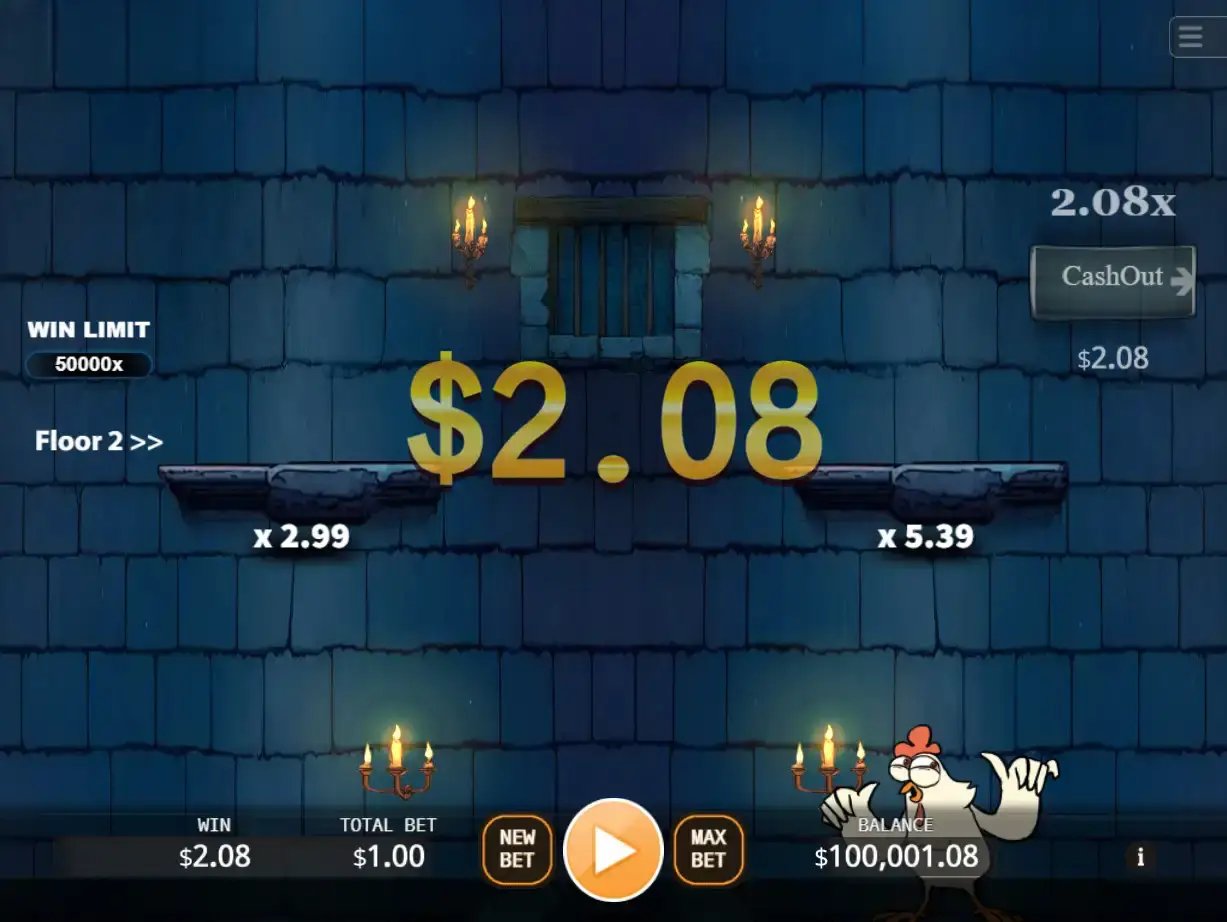
Chicken Leap, like every crash game, has a mathematical house edge. The platform builds in their profit margin. You cannot win long-term. You can have winning sessions. You can have winning streaks. But stretched across weeks and months, the odds favor the house. This is fundamental to how these games work.
I tested this reality across my sessions. Total bets placed: about 50. Total net result: I finished down roughly 1,200 BDT. That’s about a twenty-four percent loss rate, which isn’t unusual for crash games. Some of that was deliberate experimenting with different strategies, so it’s not a pure result, but the direction is clear.
The game’s appeal isn’t that you’ll win money. It’s that you might win money in any given round. That’s the psychological hook, and it’s potent. But understanding this difference is crucial. You’re paying for entertainment, not investing in income.
Comparing Chicken Leap to Other Crash Games
If you’ve played Chicken Road, you might notice similarities. Both use an animal theme, both build tension through step progression. The difference is structure. Chicken Road has up to 24 steps versus Chicken Leap’s 19. Road offers an additional golden egg bonus mechanic. But fundamentally, they’re solving the same problem in similar ways.
Chicken Crash from Galaxsys takes a different visual approach—traffic dodging instead of path crossing—but mechanically delivers comparable experience. It offers a “Go Max” feature for aggressive players, and multi-step betting options. More complexity, more features.
Aviator is the established king in this space. It’s got the largest player base, the most established communities discussing strategy, and the smoothest technical performance. If you’re choosing between games purely on stability and user base size, Aviator is hard to beat.
So why choose Chicken Leap? Honestly, it depends on what appeals to you. If you prefer simple, straightforward mechanics without extra bells and whistles, Chicken Leap is excellent. If you like the animal theme more than planes or urban settings, it’s thematically appealing. If medium difficulty variance matches your risk tolerance, it’s the right game. But if you want maximum features or the largest community, other games have advantages.
Platform Availability in South Asia
Currently, Chicken Leap is available on several platforms targeting South Asian players. RajaBaji hosts it, as does JabiBet. KheliBet has it in their portfolio. These are the main bangladeshi options as of my testing in 2025.
The critical thing before opening an account: confirm the platform supports your payment method. Most major platforms now accept bKash, Nagad, and Rocket for Bangladeshi players. Verify withdrawal speed. Some platforms process withdrawals within an hour. Others take longer. Check what their current terms say.
Also verify demo mode is available. Most platforms let you test Chicken Leap with play money before committing real funds. This is invaluable because you can confirm game performance on your specific device and network before risking actual BDT.
Responsible Play Framework
I won’t lecture you about gambling dangers. You’re an adult capable of making decisions. But I will share patterns I’ve observed that separate players who enjoy the game from players it harms.
Set a monthly budget. Stick to it. If you’re going to play Chicken Leap, decide upfront how much you can afford to lose monthly. Not “how much I might win.” How much you can lose. Because statistically, you will lose it.
Avoid playing when emotionally compromised. This means don’t play after fights, during stress, or when you’re already down about something. Crash games amplify emotional states. If you’re upset, you’ll make worse decisions and rationalize larger bets.
Track your results for two months. Write down session start amount, strategy used, final result, how you felt. This creates accountability and pattern recognition. You’ll see your actual results versus your memory of them, which are often very different.
If you ever find yourself thinking about the game when you’re not playing it, if you’re opening the app first thing in the morning before checking messages, if you’re lying about time or money spent—these are warning signs. The game should be occasional entertainment, not background radiation in your life.
Final Verdict
Chicken Leap is a well-executed crash game. The 19-step progression system works. Medium difficulty provides engaging variance. Mobile performance is solid on South Asian networks. And the straightforward mechanics mean there’s no hidden complexity making you feel like you’re missing something.
Is it the best crash game available? That depends on your preferences. Is it worth trying? Absolutely, especially if you like simple mechanics and animal-themed aesthetics. The demo is free to test risk-free.
But approach it as entertainment, not as a money-making opportunity. Budget it like cinema tickets or dining out—something you enjoy occasionally and can afford to lose. Play medium difficulty until you understand your personal limits. Cash out winning rounds instead of chasing bigger multipliers. And stop when your session budget is exhausted.
That’s how eight years of testing has taught me to think about these games. Chicken Leap, like its competitors, is designed to extract entertainment value in exchange for an edge the platform holds. Understanding that transaction upfront keeps the experience enjoyable instead of destructive.
If you decide to try it, good luck. And if you don’t, that’s the wisest decision of all.