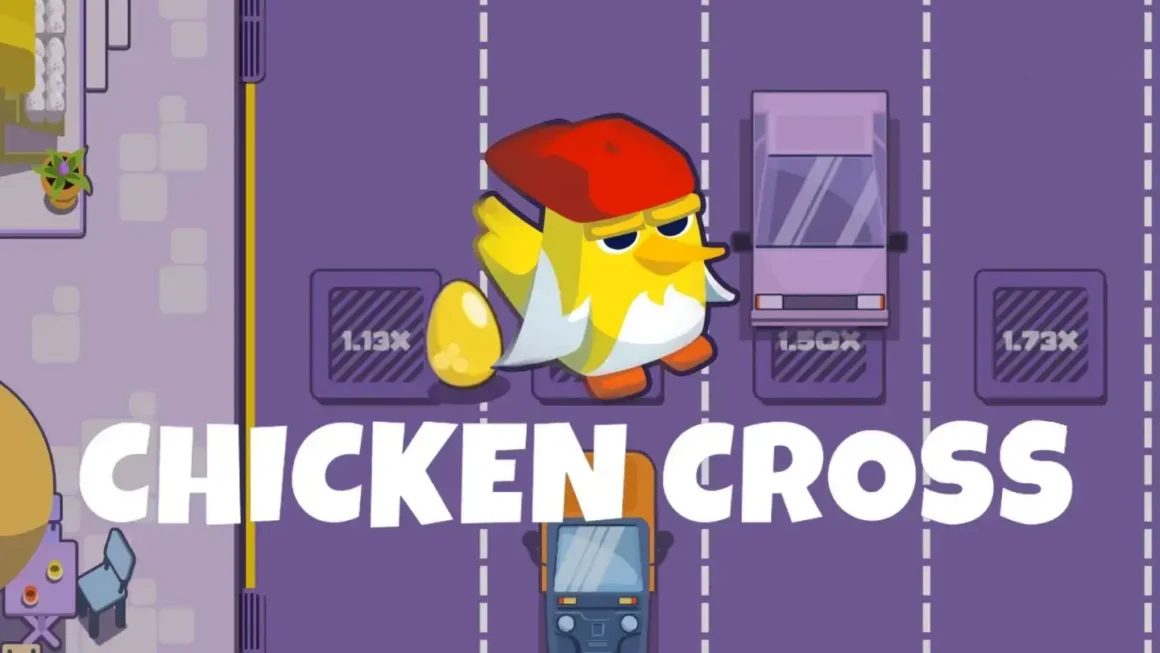
After reviewing casino games for nearly a decade, I’ve seen some wild stuff—slots with dancing cats, crash games with rockets, mines that never explode. But Chicken Cross by UpGaming? This quirky mini-game where you literally guide a chicken across a highway to win cash is something special. With a 99% RTP and genuinely addictive gameplay, it’s one of the fairest shots you’ll get at a casino.
The first time I loaded Chicken Cross, I’ll admit I laughed. A chicken? Really? But then I hit a x37 multiplier on my third attempt, cashed out $74 from a $2 bet, and suddenly it wasn’t funny anymore—it was exhilarating. I’ve since spent more hours than I care to admit perfecting my cashout timing, testing every risk level, and yes, watching my feathered friends get flattened by speeding trucks more times than my ego wants to acknowledge.
So buckle up, fellow degens. Let’s talk about why this chicken might just be your new best friend at the tables.
What’s the Deal with This Chicken Game Anyway?
Chicken Cross launched in 2024 from UpGaming, hitting the iGaming scene hard. The concept is brilliantly simple: control a brave chicken crossing a multi-lane highway packed with speeding vehicles. Each successful lane crossing cranks up your multiplier, and you can cash out whenever your nerves tell you to.
Think Frogger meets your wallet—same arcade energy, except now there’s real money on the line. For those who didn’t waste countless quarters in arcades during the ’80s and ’90s, Frogger was that addictive game where you guided a frog across traffic and rivers. Chicken Cross takes that core mechanic, strips away the logs and lily pads, cranks up the stakes, and adds instant cashout functionality.
Here’s what makes this bird special: UpGaming delivered a 99% Return to Player rate. Most slots hover around 96%, crash games maybe 97% if you’re lucky. This chicken operates with just a 1% house edge—tighter than a drum. To put that in perspective, you’re losing less to the house here than you would playing blackjack with basic strategy (around 0.5%) but way better than roulette (2.7-5.3%) or most slots (4-5%).
The game runs on HTML5/WebGL technology, meaning it works perfectly on any device without downloads. No app store visits, no storage space eaten up, no compatibility issues. Just open your browser and play. I’ve tested it on everything from flagship iPhones to budget Androids that have seen better days, from iPads to Windows laptops, and it performs flawlessly everywhere. The touch controls are particularly responsive—I actually prefer playing on my phone now over desktop.
TikTok sent Chicken Cross viral in ways UpGaming probably didn’t anticipate. Players started posting their near-death crossings and massive wins, complete with over-the-top reactions. Watching someone’s chicken dodge a bus by literal pixels while their multiplier sits at x500 is entertainment gold. The short-form video format perfectly captures the tension—will they cash out? Will they push? SPLAT. The comments sections on these videos are hilarious, full of “one more lane” memes and people sharing their own tragic chicken deaths.
The community aspect is surprisingly strong. Players share their biggest wins, worst beats, and strategies across social media. There’s even a subset of players who’ve turned Chicken Cross into content creation—streaming their sessions, posting highlight reels, building followings around this simple game. It’s wild watching a game this minimalist develop such a dedicated player base.
The gameplay itself is refreshingly straightforward: place your bet ($0.20 to $1,000), pick from four risk levels, and guide your chicken across as many lanes as you dare. Vehicles come at random intervals via certified RNG—no patterns to exploit, no tells to read. Pure chance meets gut instinct. Your chicken hops forward when you click, and either a safety barrier pops up (you’re safe, multiplier increases) or a vehicle is there (chicken down, bet lost).
What separates Chicken Cross from traditional slots and even other crash games is that instant cashout feature. You’re not locked into spinning reels until a bonus triggers. You’re not waiting for a predetermined outcome. Every single lane, you’re making an active choice: bank it or risk it. That agency is rare in casino games and genuinely refreshing. In slots, you’re basically a spectator watching RNG do its thing. Here, you’re making decisions constantly, even if those decisions are based on incomplete information and luck.

Getting Your Chicken in the Game: Real Money Setup
Time to stop window-shopping and actually play. Here’s your step-by-step guide to getting started with real money.
Find Your Casino
First, you need a licensed online casino hosting UpGaming’s catalog. Not every casino has Chicken Cross yet, so hunt around. Look for proper licensing—Malta Gaming Authority, Curacao eGaming, UK Gambling Commission. Don’t mess with sketchy unlicensed sites promising bigger bonuses.
Search for “Chicken Cross” in the casino lobby or check mini-games/crash games sections. If you can’t find it, ask customer support. Some casinos bury UpGaming titles in weird categories.
Pro tip: Read reviews before committing. Check payout speeds, customer service, and whether players actually get paid. A casino taking three weeks for withdrawals is one to avoid.
Load Up Your Bankroll
Most casinos offer multiple deposit methods:
Credit/Debit Cards: Fast and familiar, but some banks block gambling transactions.
E-Wallets (PayPal, Skrill, Neteller): My favorite. Quick deposits and withdrawals, plus an extra security layer. Minimal fees.
Cryptocurrency: Fast, anonymous-ish, no middleman. Bitcoin, Ethereum, Litecoin—most crypto casinos accept the usual suspects. Watch for price volatility.
Bank Transfers: Reliable but slow. Good for large amounts if you’re patient.
Check minimum deposits—usually $10-$20 is enough to start. Watch for deposit bonuses but read the wagering requirements carefully. A $100 bonus with 40x wagering means betting $4,000 before withdrawal.
Place Your Bets
Load Chicken Cross—it opens right in your browser. The interface is clean: bet input at bottom, risk selector, highway in center, and a big green “Bet” button.
Setting Your Bet: Start small—1-2% of your bankroll per round. With $100 to play, think $1-$2 bets. This gives you runway to handle variance.
Choosing Risk Level:
- Low Risk: Training wheels. Sparse traffic, modest multipliers (x1.01-x2.00), 80-85% success rate. Perfect for learning.
- Medium Risk: Goldilocks zone. Balanced traffic, decent multipliers (x1.05-x10+), good for casual sessions.
- High Risk: Traffic picks up, multipliers get spicy (x1.10-x50+), survival rate drops. For confident players.
- Daredevil: Pure madness. Multipliers hit x1000 but collision rate is ~40% per lane. Only when you’re ready to potentially torch money.
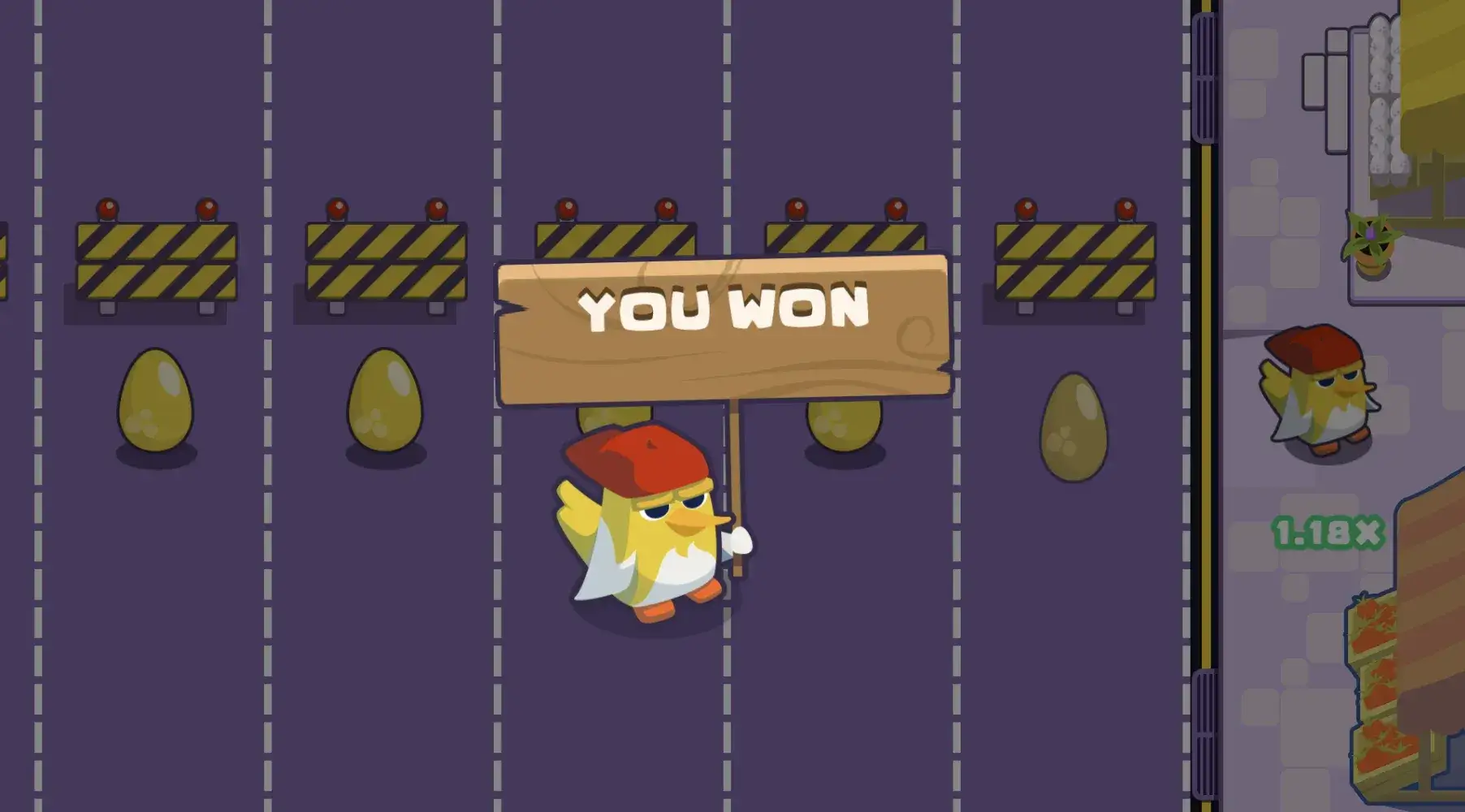
Hit “Bet” and your chicken appears. Click to advance lane by lane. Clear lane = safety barrier + higher multiplier. Vehicle present = flattened chicken + lost bet.
The Cashout Decision: After every successful lane, that cashout button glows temptingly. Do you take x3 and run? Push for x10? Maybe x100?
My advice: set a target before clicking Bet. “I’m cashing at x5” keeps emotions in check. Of course, I break my own rules constantly, which is why I’m writing this at 2 AM.
Cashing Out
You’ve turned $50 into $200? Time to withdraw. Head to cashier, select “Withdrawal,” choose your method (same as deposit for faster processing), enter amount, submit.
E-wallet withdrawals process within 24 hours. Crypto can be minutes. Cards take 3-5 business days. Most casinos require identity verification before first withdrawal—upload ID and proof of address early.
Watch for withdrawal limits and minimum amounts (usually $10-$20). Some casinos charge processing fees, especially for cards. Factor this into profit calculations.
Strategies That Actually Work (Not Magic Beans)
No system beats RNG long-term. The house edge exists. But there are smart ways to play versus dumb ways, and I’ve learned plenty after hundreds of sessions and more flattened chickens than I can count.
Bankroll Management: Don’t Bet the Farm
Your bankroll is the total you’re willing to lose—accept it as potentially gone forever. If thinking about losing that money makes you anxious or affects your rent payment, that’s not your gambling bankroll. That’s your life money, and it stays in your savings account.
Once determined, unit sizing becomes crucial. I recommend:
- Conservative: 1% units ($1 per $100 bankroll)
- Moderate: 2% units ($2 per $100)
- Aggressive: 3-5% units ($3-$5 per $100)
Never exceed 5% unless you’re explicitly gambling for thrills and accept going bust fast. The math is simple: smaller units = more attempts = variance evening out. Three big bets in a row at 10% of your bankroll, and you’re down 30% before you’ve figured out which way is up. That kind of damage takes serious grinding to recover from.
Here’s my personal approach: I set session bankrolls. With $200 total, I divide into four $50 sessions. Lose one? Mandatory break—minimum 30 minutes, ideally a few hours or the next day. This prevents the tilt-fueled “I’ll win it back” spiral that’s destroyed so many bankrolls.
If I double a session bankroll (turn $50 into $100), I pocket the original $50 and play with pure profit. Psychologically, “playing with house money” is liberating. Even if I lose it all back—and sometimes I do—I break even for that session.
Stop-losses and win goals are critical but require iron discipline. Before starting, decide: “If I lose $X, I’m done” and “If I win $Y, I walk.” Stick to these religiously. I’ve personally set a win goal, hit it, kept playing “for fun,” and given back every penny plus more. Learn from my mistakes: when you hit your goal, close the damn browser.

The Consistent Cashout: Grinding Small Wins
This strategy is for players preferring reliability over moonshots: Play Low or Medium risk. Cash out at x2 or x3 every single time. No exceptions. Boring? Absolutely. Profitable? Surprisingly yes, especially short-term.
With Low risk, you succeed ~80% per lane. Hitting x2 typically takes 2-3 lanes, giving you roughly 50-60% success per attempt. You’ll lose plenty of bets—variance guarantees that—but winners come often enough to grind out small profits.
I tested this rigorously over 100 rounds: $1 bets, Medium risk, mandatory cashout at x3. Results? Ended up $23 after two hours. Not life-changing money, definitely won’t quit your day job, but I was never in danger of busting, my stress levels stayed low, and it was weirdly meditative. Just chicken, click, cashout, repeat.
The spreadsheet data from that session was revealing: 58 wins, 42 losses. But those 58 wins at x3 generated $174 in total returns against $100 in total wagers, netting that $23 profit after accounting for the 42 losses. The variance was manageable—my biggest losing streak was 5 rounds, biggest winning streak was 8 rounds.
Downside? You’ll never hit those x50+ or x100 rushes that make great TikTok clips. You’re trading moonshot potential for consistency. If watching someone else’s x247 win makes you regret your strategy, this isn’t for you. But if you’re trying to clear a bonus wagering requirement, stretch your entertainment budget, or just want low-stress gambling, it’s remarkably solid.
Pro variation: some players use a modified version where they cash at x2 until they’re up, then take one shot at x10+ before returning to the grind. Personally, I find mixing strategies leads to indiscipline, but you do you.
Bonus Hunting: Let Casinos Fund Your Play
Casino bonuses work if you understand terms. Most offer deposit matches, cashback, and reload bonuses. The trick is reading the fine print so you’re not handcuffed.
Deposit Bonuses: Match your deposit 50-200%. A 100% bonus up to $100 means deposit $100, get $100 free, play with $200. Sounds great until you see 40x wagering on bonus amount. That $100 bonus requires $4,000 in total bets before withdrawal.
Key questions:
- What’s the wagering requirement? (Under 30x is reasonable, 40-50x is pushing it, above 50x is a trap)
- Does Chicken Cross count 100% toward wagering? (Some games only count 10-20%)
- Maximum bet limit while wagering? (Many restrict to $5-$10 max bets)
- Time limits? (Some bonuses expire in 7-14 days)
- Game restrictions? (Some exclude mini-games entirely)
Real example from my testing: I claimed a $50 deposit bonus with 35x wagering. That’s $1,750 in total bets required. Playing Chicken Cross at $1 per round with my consistent x3 cashout strategy, I cleared it in about 600 rounds over three days. Tedious? Yes. But I ended up with $47 net profit after clearing the bonus. Some players would say that’s not worth the effort; I’d rather have $47 than $0.
Cashback: Returns 5-20% of losses, usually minimal wagering (1x or none). Lose $100, get $10-$20 back, use it however you want. This is my favorite bonus type because it’s straightforward—no tricks, no traps. Pure value.
VIP Programs: Regular play unlocks points converting to cash/bonuses. The more you play, the more perks. Some casinos offer personalized bonuses based on your play style—if they see you’re a Chicken Cross regular, they might send custom offers. I’ve gotten rakeback deals, exclusive reload bonuses, and even birthday bonuses through VIP programs.
Strategy: Use bonuses to extend playtime, not as primary bankroll. Restrictions can force suboptimal play—if you’re locked into max $5 bets but your strategy calls for $10, you’re compromised. I typically play with real money first, then use bonus money for lower-risk grinding sessions where the restrictions don’t hurt my strategy.
Don’t Bet Like Your Hair’s on Fire: Emotional Discipline
Emotional betting kills bankrolls silently, creeping up on everyone from rookies to veterans who should know better.
The Revenge Bet: Five losses in a row. Jaw clenched. Fingers hovering. Voice screaming “THIS TIME IT’LL HIT.” Stop. Take three deep breaths. Walk away.
When tilted—and everyone tilts eventually—decision-making evaporates. You chase losses, double bets, abandon strategy, pick Daredevil mode because “it’s due.” Except RNG doesn’t care about fairness or what you’re “due” to hit. Each round is independent. That cold streak doesn’t increase your chances of winning the next one. If anything, continuing while tilted decreases your chances because you’re making emotional decisions instead of strategic ones.
My hard rule: three losses in a row at standard bet = 10-minute mandatory break. Get up, walk around, grab water, check social media, pet your dog, whatever. Breaking the “just one more” cycle prevents hemorrhaging money on tilt. I’ve saved myself hundreds, maybe thousands, by following this simple rule.
Winner’s Curse: You hit x87 on a $5 bet, suddenly $400 richer, feeling invincible. This is peak danger.
Winning releases dopamine just like losing triggers chase response. When feeling unstoppable, you start making bigger bets, taking unnecessary risks, convinced your hot hand continues. Narrator voice: it doesn’t. I’ve personally watched my biggest wins evaporate in 20 minutes because I thought I couldn’t lose. That $400 win? Gone, plus another $100 of my original bankroll. Painful lesson.
Solution: when hitting significant wins (whatever that means for your bankroll), lock in profits immediately. I withdraw half instantly—not “later,” not “after a few more rounds,” immediately. The remaining half I might play with or might withdraw too. But protecting at least half ensures I don’t leave the session in the red after a monster win.
Boredom Betting: Consistent strategy working but boring, so you spice up with one Daredevil round for excitement. This turns winning sessions into losses with frustrating regularity.
If strategy bores you, that’s a sign to take a break or switch games—don’t sabotage your plan. I keep a game rotation for exactly this reason. When Chicken Cross gets repetitive, I’ll play some slots or try live dealer games instead of making dumb high-risk bets to feel something. The variety keeps gambling fun instead of a grind.
Track sessions honestly, including ugly ones. My Chicken Cross spreadsheet shows overall profit of $347 over 6 months—not huge, but consistent. But that’s built on 73 winning sessions and 61 losing sessions. Plenty of red days mixed with the green. That’s gambling. The goal is long-term discipline producing slow, steady profits, not perfect short-term results or massive one-time scores.
Where to Actually Play This Game
Chicken Cross availability varies by region, but reliable options exist across markets.
Crypto Casinos: Early adopters with fastest withdrawals (minutes to hours), better bonuses, fewer geographical restrictions. You need cryptocurrency comfort.
European-Friendly Casinos: MGA or Curacao licensed platforms with euro accounts, SEPA transfers, and localized support.
Mobile-First Platforms: Since Chicken Cross shines on mobile, casinos optimized for smartphones are perfect. Streamlined interfaces and quick e-wallet deposits.
Sweepstakes/Social Casinos: In restricted regions, social casinos offer workarounds using virtual currency with redemption options. Different legal framework, identical gameplay.
Before joining, verify:
- UpGaming game library includes Chicken Cross
- License numbers (check footer and verify with authority)
- Your preferred payment methods supported
- Player reviews (Google casino name + “review”)
- Support responsiveness (test live chat first)
Red flags:
- No visible licensing
- Massive deposits required before withdrawals
- Consistent non-payment complaints
- Broken English terms and conditions
- Too-good-to-be-true bonuses
Start with smaller test deposits ($20-50) even if planning larger amounts. Test the full cycle—deposit, play, withdraw—before committing serious money.
Picking Winners: What Makes a Casino Worth Your Time
Licensing: Non-negotiable. Stick with Malta Gaming Authority, UK Gambling Commission, Curacao eGaming, Gibraltar. “Licenses” from random Caribbean islands? Pass.
Payment Speed: Crypto within hours, e-wallets within 24 hours, cards 3-5 days. Two-week processing for $50 withdrawals indicates problems.
Customer Support: Test before depositing. 24/7 live chat with knowledgeable staff versus email-only with three-day response times.
Bonus Transparency: Fair casinos have clear terms. Wagering under 35x is fair, 35-50x acceptable with good terms, above 50x is a trap.
Mobile Experience: Responsive design, intuitive navigation, full game library access. Clunky mobile sites are dealbreakers.
Security: SSL encryption standard. Two-factor authentication is a plus. Responsible gambling tools (deposit limits, self-exclusion) indicate ethics.
Reputation: Established casinos with years of operation and positive reviews are safer than brand-new platforms. Check forums and Reddit threads.
Personal preference: casinos treating players like adults—clear terms, fast payouts, responsive support, fair games. Zero patience for operators making withdrawals difficult or trapping players with predatory bonuses.
Your Burning Questions Answered
Q: Is Chicken Cross rigged or fair?
Fair. Certified RNG technology tested by independent laboratories. 99% RTP is verified and transparent. UpGaming operates in multiple regulated markets. Short-term variance is huge—you can lose or win ten in a row. Long-term, math works out to 99% return.
Q: What’s the best risk level for beginners?
Low or Medium. Low lets you learn mechanics without getting demolished. Medium offers better excitement once you understand the game. Save High and Daredevil for when you’ve got timing and bankroll management down.
Q: Can I win big money?
Yes and no. Maximum win caps at $10,000 per round. Hitting x1000 on a $10 bet is $10,000. I’ve witnessed four-figure wins. High RTP means profit is possible, but gambling is gambling. Most sessions are modest wins/losses with occasional swings.
Q: How does it compare to Mission Uncrossable?
- RTP: Chicken Cross 99% vs. Mission Uncrossable 96%
- Max Multiplier: Mission Uncrossable goes 3,000x+ vs. Chicken Cross 1,000x
- Verification: Mission Uncrossable uses blockchain; Chicken Cross uses certified RNG
- Feel: Mission Uncrossable is hardcore; Chicken Cross is polished arcade
Both great. Chicken Cross for better returns; Mission Uncrossable for max win potential.
Q: Is there a demo version?
Yes! Most casinos offer free demo mode with virtual credits. Same gameplay, zero risk. Perfect for learning mechanics and testing strategies before risking real money. No registration required.
Q: What’s the house edge?
1% (flip side of 99% RTP). Theoretically, for every $100 wagered, casino keeps $1 long-term. Short-term variance means individual sessions swing wildly. Over thousands of bets, math averages toward 1% edge—one of the lowest in casino gaming.
Q: Can I play on mobile?
Absolutely. HTML5/WebGL-based works perfectly on iOS and Android browsers—no download. Touch controls are responsive, interface scales beautifully. I prefer mobile; tapping feels more natural than mouse clicking.
Q: Do betting systems guarantee wins?
No. No betting system beats RNG long-term. Martingale, Fibonacci, D’Alembert—all eventually fail from table limits, bankroll constraints, or brutal streaks. Chicken Cross has positive expected value relative to most casino games, but house edge still exists. Systems might help manage bankroll or provide structure, but don’t magically generate profits.
Q: What if I disconnect mid-game?
Round typically completes based on your last action. If mid-lane without cashout, RNG determines outcome. When reconnecting, you’ll see results. Casinos usually have disconnect protection—server-side disconnects (their fault) often get refunds. Your internet failing (your fault) means round still resolves. Play on stable connections.
Q: Is this legal where I live?
Depends entirely on jurisdiction. Online gambling is legal and regulated in UK, Malta, most of Europe, parts of US/Canada, but banned or restricted elsewhere. Check local laws. In regulated markets, ensure casino holds appropriate license for your region.
Final Thoughts from the Trenches
After all this chicken talk, here’s my honest take: Chicken Cross is a genuinely fun, surprisingly fair casino game that deserves its viral success. The 99% RTP is hard to beat, the gameplay is immediately accessible but strategically interesting, and watching that little chicken dodge trucks never gets old—until it does, and then it gets old fast, but in a good way.
Is it revolutionary? Nah. It’s a clever twist on classic arcade design with gambling mechanics bolted on. But sometimes simple is best. I’ve spent enough time with bloated, over-designed slots with 47 bonus features that trigger once per decade. Give me a chicken, a highway, and a decision-making challenge any day.
Should you play it? If you enjoy skill-based decision-making, can handle variance without losing your mind, and want better odds than most casino games offer, absolutely. If you’re looking for passive entertainment where you just hit spin and zone out, maybe stick to traditional slots.
My personal strategy after hundreds of sessions: Medium risk, cash out between x5-x10, never chase losses, and always quit when I’ve doubled my session bankroll. This has kept me profitable (slightly) over the long haul while providing plenty of entertainment value.
Remember: the house always has an edge, even if it’s only 1%. Gamble for entertainment, not income. Set limits, stick to them, and never bet money you can’t afford to lose. Your chicken might be brave, but your bankroll shouldn’t be reckless.
Now get out there and show that chicken how to cross a road properly. Just maybe keep a spare chicken or ten handy—you’re gonna need them.
Happy crossing, and may your multipliers be ever in your favor.